“Good pictures come from working the situation – the light, the composition, but you’re also always hoping – and looking – for something unexpected to happen. The wonderful thing about photography is that serendipity will make the frame. But you have to be prepared to be lucky.”
19 January 2011
| Silver Efex Pro 2 ★ | niksoftware.com |
 © Joel Tjintjelaar
Undoubtedly the best black/white app ever created, and it just got a lot better with these headliners:
- Improved algorithms with Dynamic Brightness, Fine Structure, Soft Contrast, Amplify whites/blacks (and there’s that grain engine too.)
- History Browser
- Customizable borders
Also on the list: a new Selective Color feature that does you-know-what, and a nice video profiling Joel Tjintjelaar and his minimalistic B/W landscape photos.
18 January 2011
| I, Blogger ★ | gabrielaherman.com |
© Gabriela Herman
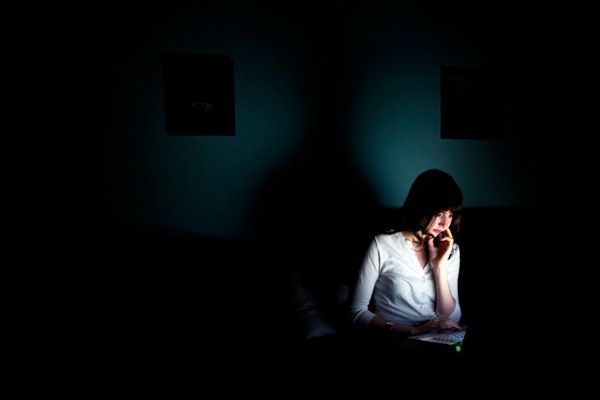
Elegant captures by Gabriela Herman. (via two four finching)
10 January 2011
| Bare ★ | shutterfinger.typepad.com |
I have an undying theory, and a year-old draft on this thought about “bare” photography.
The problem is, I could never bring myself to hit the “Publish” button; I feel wrong about writing about minimalism on photography whose content is longer than a caption-length.
This piece by Gordon Lewis reminds me of that draft, and instead of pushing that publish button, I’m going to just link it this time, and this bit, in particular, caught my attention:
It shouldn’t surprise you that this minimalist mindset extends to my choice of equipment as well: one camera, one lens. These days it’s generally a 35mm f/2, which translates to a 50mm-equivalent in APS-C format. Sure it limits my options; that’s the point.
This quoted passage, and this piece I’m working on is something that I’d like to see where this blog is heading next, empowerment through the art of reducing, the art of essencializing. Welcome to the future, 2011.
The Great Cuts
Some of the films that left a lasting impression often can be attributed to the great spectacles, excellent writing, and impeccable sense of unique taste in putting them all together. More often than not, the bigger impression comes from the smaller details, some particular scenes, sequences, or moments that puts a smile on our face.
Being a visual dreamer that I am, most, if not all of those moments share some kind of a spectacular photographic achievement more than the actions, sound/music or the writing put together, but then again, failure to attribute them would be an artistic violation cause without them, those achievements are half done.
Over the years, I have been slowly collecting those happy moments where stationery movements on screen can bring so much joy and awe, and how these talented souls have put some dent in our heart, touching our very soul with excellence. As the hours of 2010 coming to an end, and the sunrise of 2011 approaches, it would be a thrill to visually relive these great cinematic achievements and share them with a like-minded souls like you are, and as Christopher McCandless wrote in his diary (from the movie Into the Wild): “Happiness only real when shared.”
This may not be a recipe for a great movie, and many of the films and shows found here are, in no way, perfect, but these scenes that made it to the final cut are game changers and should redefine how still & motion pictures are crafted.
Enjoy the show.
Memorable scenes and spectacular sequences from feature films or television shows as seen by yours truly.
(Appears in no particular order)
Avatar: Jake’s First Flight
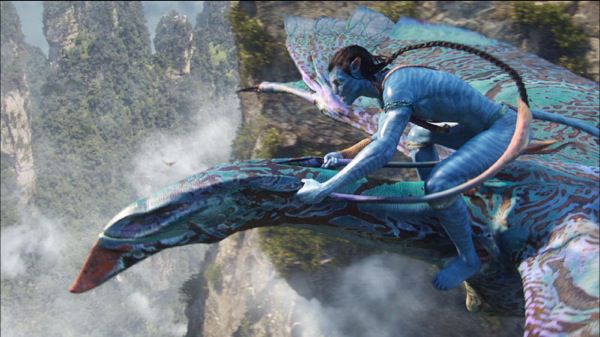
Directed by James Cameron, cinematography by Mauro Fiore, original music by James Horner
It’s Jim Cameron’s favorite scene in Avatar, I still have my goosebumps every time I remember the sequence.
Inception — The Hotel Fight

Directed by Christopher Nolan, Special Effects Supervisor: Chris Corbould, original music by Hans Zimmer
Trivia: Took a month to complete, weeks of tests to get the effects right. (especially taking the five bodies afloat into an elevator)
Imagining an intense fight scene in zero gravity is one thing, but making them happen, and as real as possible with long cuts with great choreography and real action deserves an Oscar for itself. The WSJ blog talks to Chris Corbould on how they dreamed up and deliver the effects.
The Social Network — Henley Race Scene

Directed by David Fincher, cinematography by Jeff Cronenweth, music (In the Hall of the Mountain King) adapted by Trent Reznor Clip:
There’s no story here except a rowing race, but the great camera angles, and the great editing make it the most interesting rowing race I’ve seen on screen. Here’s the director, David Fincher talking about the scene.
Smallville: Reckoning — Jonathan Kent’s Funeral

Directed by Greg Beeman, cinematography by Barry Donlevy, original music (I Grieve) by Peter Gabriel
Great camera, great color, apt choice of music edited nicely into a 3-minute screen orgasm.
Up: Married Life – Carl & Ellie

Directed by Pete Docter & Bob Peterson (co-director). original music by Michael Giacchino
I see no other way to tell a story of a young boy falling in love to a young girl and live happily ever after till the day she dies, in five minutes.
CSI: Chaos Dominium — Bullet Time
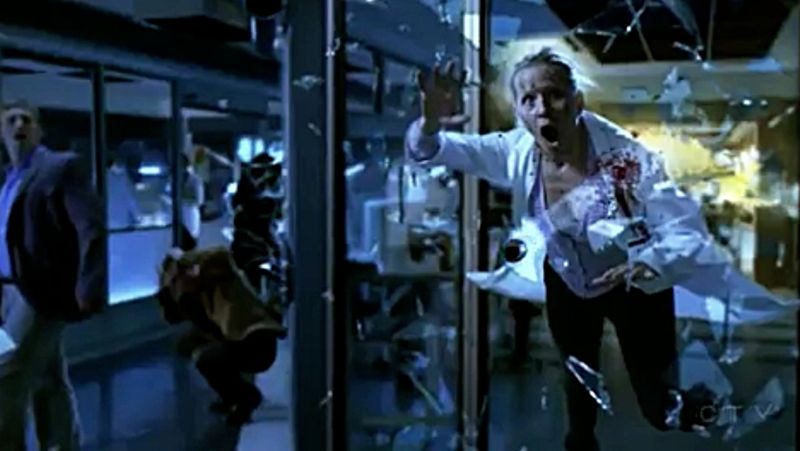
Directed by Kenneth Fink, cinematography by Christian Sebaldt, original music by John M. Keane.
This two-minute sequence shows what a water drops in the air looks like, speeding bullet, exploding skin tissue and frozen mobs having a gun fight with the goods guys inside a crime lab. Rumor has it that it costs more than US$300.000 to make.
Harry Potter and The Deathly Hallows (Part 1): The Tale of the Three Brothers Animated Sequence

Directed by Ben Hibon, Supervised by Dale Newton (Framestore)
It’s a combination of shadow puppet, stop motion and graphic animation, it’s like magic. Great scoop by Cartoon Brew and FXGuide has an interview with the sequence supervisor Dale Newton.
Hero — Duel in the Forest

Directed by Zhang Yimou cinematography by Christopher Doyle original music by Tan Dun
Hand it over to Zhang Yimou and the chinese, they invented the power and the look of Kungfu on screen. Also check out the The Imaginary Chess Duel.
Ronin — Car Chase
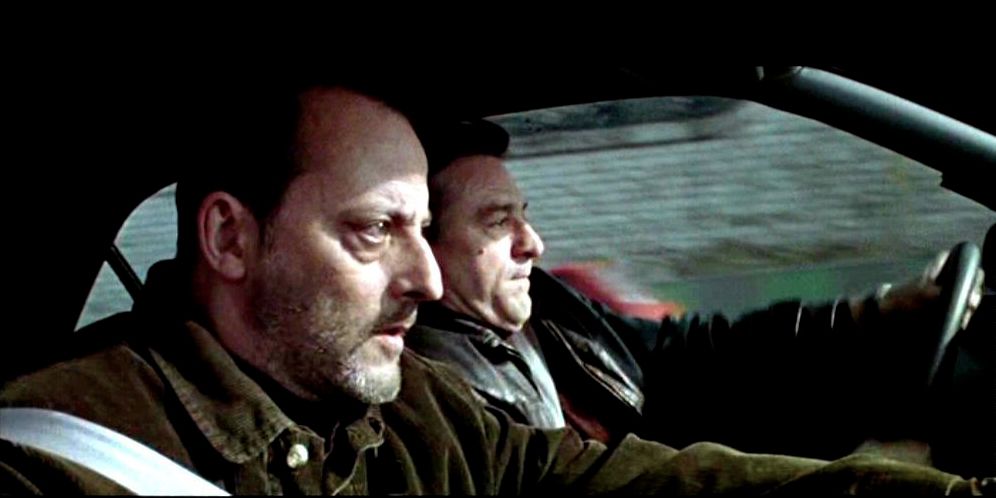
Directed by John Frankenheimer, cinematography by Robert Fraisse original music by Elia Cmiral
Ronin practically set the new standard for car chases scenes. A must watch.
House of Flying Dagger — Duel at the Drum Room

Directed by Zhang Yimou, cinematography by Xiaoding Zhao, original music by Shigeru Umebayashi.
I’m no fan of the movie, but it’s Zhang Yimou, and this scene, among many others are just too good to be missed.
This article is always going to be a work in progress, and by no means, is this piece a year-end special, or even remotely related to what this blog regularly publishes.
Happy New Year.
25 December 2010
| Crazy Heart ★ | jeffbridges.com |

© Jeff Bridges
He shoots almost exclusively with a Widelux, he sings, and I also heard he took home the Oscar for a brilliant movie that shares the same title with the book above.
I’m pretty sure you’ve heard about this particular photographer; he’s name is Jeff Bridges.
The man knows his style and he swears by it, instead of regular blog posts, he paints and handwrites almost his entire website, and publishes his photo gallery in a full-spread book metaphor that I grew to enjoy.
He has a photography section where he publishes his other two books in entirety, and one of them is the making Iron Man oh-so-plenty of behind-the-scenes for the director in you.
At the same time, I would like to wish you a Happy Christmas and a great holiday seasons.
Noble Subtlety
© Fujifilm
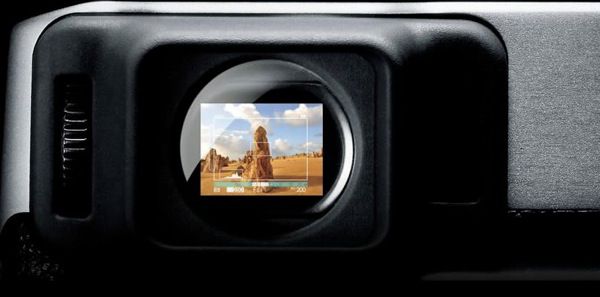
Great products are achieved through excellence in design and engineering. Great design comes from recognizing subtlety the users would often neglect, or simply ignore, but will catch everyone with that “aha!” impression upon recognizing it.
The Fuji Finepix X100 team on the birth of the hybrid viewfinder:
When the engineers discussed the features to incorporate in the X100, the first item that was raised after deciding that it must have an exceptional lens was a return to the fundamentals of what makes a great camera and the enjoyment of peering through a high-quality viewfinder.
You are looking at a great camera in the making, and the team is sharing the stories behind it; their first chapter, how the X100 lens came about is an equally enjoyable read.
Great scoop by TOP
20 December 2010
| Fourteen Acts Too Many ★ | nytimes.com |

© New York Times Magazine
Characters are build up from acts, actions and inactions, but more often than not, best captured in one frame.
Produced by the NY Times Magazine, directed by Solve Sundsbo; Javier Bardem, James Franco, Natalie Portman, Jesse Eisenberg, Chloë Moretz, Matt Damon, Michael Douglas, Jennifer Lawrence, Noomi Rapace, Vincent Cassel, Anthony Mackie, Robert Duvall, Lesley Manville and Tilda Swinton put a one-minute act and captured it as a gallery of classic look video portrait with musical arrangement by Owen Pallett.
Overwhelming? Confusing? One too many? How about sparing yourself fifteen minutes to enjoy this personas on screen before they changed their mind.
The lens blog has a writeup for this special Hollywood Issue, and words has it that the actions were captured by the RED EPIC and ONE digital cinema camera system.
2010
20 December 2010
© Mark Dadswell/Getty Images
The dusk is setting as we slowly reach the end of 2010. One of my favorite editorial team, The Boston Globe published a 3-part special feature of forty remarkable shots from their photo of the day archive. The jump will take you to part 3, but you can find the rest here: Part 1, Part 2.
13 December 2010
| Fujifilm X100 Details Emerged ★ | finepix-x100.com |
© Fujifilm
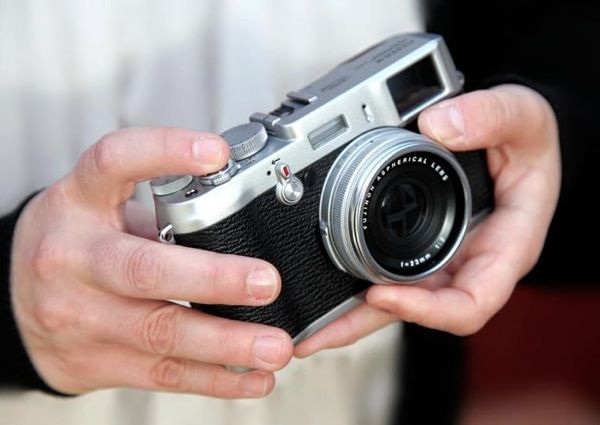
The FinePix team is fully aware about the hype on the X100, and they don’t want to let us down, indeed.
Interesting key feature:
- Optics will be an auto-focus 49mm ring, fixed lens 35mm ƒ/2.0. No Image Stabilization.
- The camera will have a dedicated RAW button that allows instant toggle to shoot RAW+JPEG, with in-camera RAW development mechanism.
- 3-mode auto focus — with user-selectable focus points — will be introduced: AF-S, for static and AF-C for continuous, moving objects and naturally a manual focus with 1) distance indication for pre-focus, 2) electronic viewfinder from the lens-barrel ring.
- The APS-C CMOS sensor is capable of ISO extended to 100–12800 from the standard 200–6400.
Even more details (geek mode on):
- Shutter lag will be around 0.01 seconds, I’m not sure if that’s the ballpark figure for DSLRs, but Fuji claims it to be comparable.
- It will have digital film simulation (Provia, Velvia, Astia lovers rejoiced!)
- The 3-stop integral ND filter can be switched ON/OFF manually
Despite the obvious inspiration and design similarity, Fuji confirms that the X100 is not a rangefinder camera, and insists that ‘MADE IN JAPAN’ to be etched at the camera back-plate, not the bottom.