Sleeping Beauty
31 March 2010
| Perspective & The Focus Layer ★ | boston.com |

© Carlos Barria/REUTERS
Zoom-in, zoom-out, focus, re-focus — The Boston Globe’s The Big Picture Photoblog
| Shadow from the Past, Light of the future ★ | 1854.eu |
 © The British Journal of Photography Blog/Olivier Laurent.
The impossible became possible again. Fruit of the Impossible Project, Polaroid returns to the photo-scene after a group of obdurate people decided to restore the old age wonder to a brand new heyday. Follow the picture for the packaging gallery (isn’t that yummy!) and here’s some reading for the curious ones on the impossible project page.
Some work get published, most aren’t. Some made it, most didn’t. For those who are passionate, strong & persistent enough will eventually makes it, one way or the other.
Time is not the X factor.
In extreme cases, some of us made it earlier than others; by made it, I’m talking about one person’s ability to deeply understand one subject of activity–like a hobby, spent a great deal of time walking, running, eating, sleeping & dreaming about it, and at some point of his life the eureka moment comes and he started excelling on it. Some shall made a big material fortune off it, but that one of a true artist, one that truly excels and ‘enlightened’ on that subject matter change other people’s live… sharing the knowledge while continue breathing & living with that path.
Money is not the X factor.
Joey L–as he prefers to be called, is that extreme case of this rare talent that touches people’s life while acquiring the greatest fortune of life money can’t buy — the knowledge & his path of love.
He is in his early twenties–as of this writing, with a body of work hard to come by at such a delicate age. He discovered his true passion early, picked up the tricks along the way and the world opens up to him. The work that follows are the product of his love, one that has a common quality of divinity, with beauty so profound that will create a universal bridge that takes us to his playground during that infinite seconds of witnessing beauty.
Passion is truth.
I am truly happy to have discovered him, I hope he touches your heart like he did mine. The image below will take you to a blog post where his select images are curated by the fine folks of The Graphic Exchange Project, but more treasure should be found at his personal website JoeyL.com and his Learn-from-Joey video series.
True beauty inspires. Those who knows how to listen shall learn & prosper.
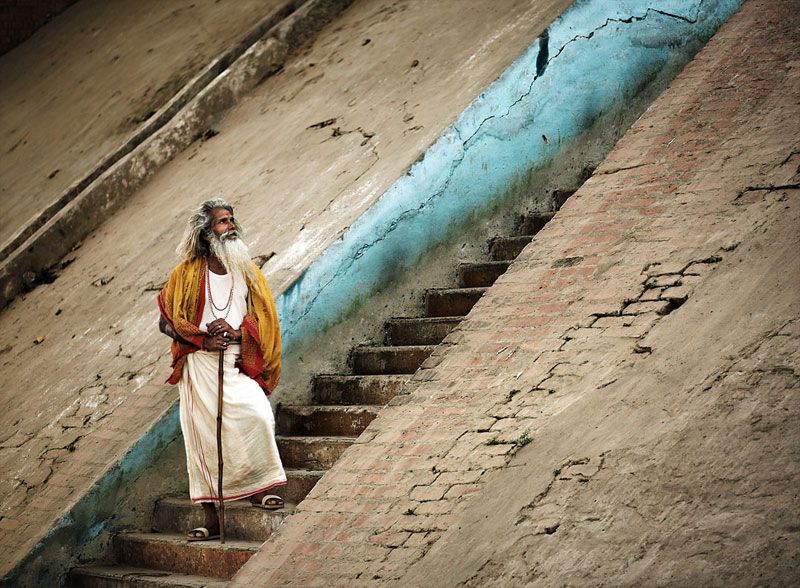
© Joey Lawrence
“Maybe, these days, the question isn’t “What is a photograph?”; it’s “What is reality?” touts David Pogue, an NY Times’ celebrated technology columnist in his personal tech column.
Pogue enlisted 14 things we do to and for our photographs; in reality, we do much, much more than what he suggested; just like how we care our pets to the ends of manicures & fashion, enough is never enough.
Particularly, I was (have always been) intrigued by this very topic in photography. Photography itself, is a fabrication of reality formulated by the lights and optics in a manmade device called camera; in the digital age, the projected image that we see on-screen is an illusion of digital signals with millions of color combination as the result of a complex computional calculation, interpretation & manipulation of analog data.
In simple terms, what you see on-screen is a projected digital reality of an analog objects.
Coming to the heart of the matter, competitions, awards & public recognition are the most sought-after prize a photographer could hope for, so important to some, they would go to the length of unethical manipulation of reality, breaking the holy-grail of ethics for those who are the eyes & ears to the public to win the hearts of the public. Such incident happen today when World Press Photo winner, Stepan Rudik was disqualified for altering the content of his winning image. World Press Photo:
The content of the image must not be altered. Only retouching which conforms to the currently accepted standards in the industry is allowed.
What remains is our moral capacity to say enough is enough, leave it to the eyes of the people to see, or judge for themselves for the reality they want to believe. There are things that you can change, adjust; that is us and the way we can cope with the moment and our vulnerable ego, I often found that when I don’t get the image I want, it simply isn’t meant to be, great things happen when we just surrender and let the event unfold naturally. Our alteration before or after the image was capture would only devalue it.

From the archive: One summer in Shanghai, circa 1999 © Will Wiriawan
| The Hermès M7 ★ |

In addition to the silver chrome camera, the special LEICA M7 Edition Hermès set also includes a matching, silver anodised LEICA SUMMILUX-M 35 mm ƒ/1.4 ASPH. wide-angle lens.
One could not help but wonder if it comes in pink?
(via photojojo)
As the sky changes and the swallows cue the dawn— watching over from my 6-story high window, the flat-lined profile of the city’s landscape pokes to the horizon as the sun rises. A hint of the boats’ diesel engine and its horn signals the beginning of a busy day along the banks of the Kapuas River, where the city’s ethnic Chinese, Dayak & Malay inhabitants are warming up their hands to embrace the biggest celebration of the year, celebrating the last day of the Lunar New Year in the form of a festival called ‘Cap Go Meh’.
(… to be continued)
I have just returned from a trip to Borneo’s Jewel, West Kalimantan Province’s Capital—Pontianak; where for the first time of my life, I learned how this nation came about. It’s a humble city with a big pile of historical record in its belly, I am still attempting to process all the information I gathered during the 6 days I stayed there, during which, me & my camera were breathing along this city of 500.000 souls, eating, walking & celebrating nature’s indigenous creation of people & its way of life.
Stay tuned for massive influx of pictorial flood & wordy rumble of this amazing place, people & culture; meanwhile, an Indonesian Na’Vi, Statue of Little Barry, Indonesian Forest and its inhabitant—the tigers, are part of the 36 brilliantly curated recent scenes from Indonesia that will be an appropriate prelude to the excerpt above.
Happy March, everyone!
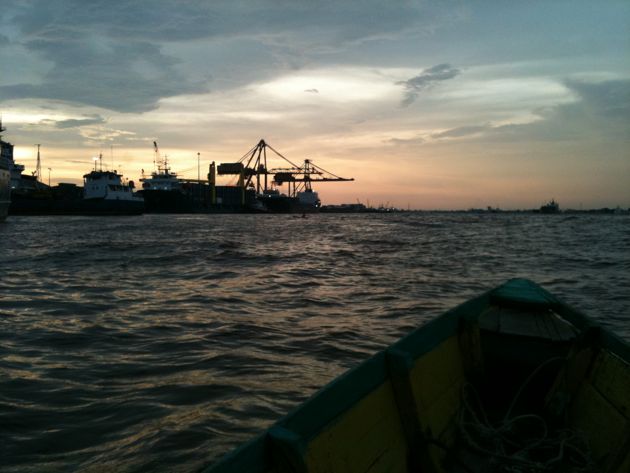 Pontianak Sunset—from the Kapuas River. March 1, 2010, 5:46 pm. © Will Wiriawan.
| Breathtakers ★ | boston.com |
Ice, action & breathtaking views. Pinnacle of human achievement in extreme sports & photography.
The Big Picture‘s selection of 2010 Vancouver Winter Olympics.

| Shooter’s Insight ★ |

© Canon USA
Canon USA’s Digital Learning Center has published their latest issue of online featurette. First up, two Shooter’s Insight multimedia for their latest cameras The EOS 7D & EOS 1D Mark IV.
While you’re there don’t miss the Tilf-Shift Lenses Special Feature and the popular Nocturne short by Vincent Laforet.

© Fritz Hoffman/National Geographic.
National Geographic is one of the few publications on earth that photographers & writers can drink and cheer about in the same room without getting into a fight.
Photographed by Fritz Hoffman, with words by Brook Lamer, the magazine’s March issue of ‘Shanghai Dream‘ caught my attention for its bold and unusual full double-spread feature photo; closeup shot of the cities’ three iconic architecture: The IFC Tower, Jin Mao Building and The Oriental Pearl TV Tower.
The three construction wonders were topics of brainstorm, political debate and social gatherings even before the first brick was planted, my alma-mater, China’s Top Architecture School, Shanghai Tongji University were involved in the design, engineering even the construction of all three towers; I was a student when The Oriental TV Tower started construction, finished when I took a leave from school.
Nearly 10 years since I left Shanghai, it’s nice to see the three finally can stood together in one page from such an extraordinary point of view; and for the next couple of months during the World Expo 2010 — you can finally enjoy a clean, frozen state of construction-less Shanghai, a perfect time to visit this flamboyant city of constant changes.