Ricoh GR Digital III: Faster, better, smarter but not smaller

ricoh-grdiii-camera0000.jpg

Following the success of the GRD II, Ricoh has recently introduced a new camera to the GRD product line-up, here’s what they have to say about it:

Taking the GR DIGITAL concepts another step forward, the GR DIGITAL III achieves even greater image quality

  • The new image processing engine GR Engine III is installed. Using newly developed noise reduction technology, it enables highly sophisticated noise processing to be done while maintaining superior resolution, tone characteristics, and saturation.
  • The new high-sensitivity CCD (1/1.7 inch, approx. 10 megapixels) achieves high-sensitivity properties through the use of a new process. The combination of the newly developed GR Lens and GR Engine III significantly increases shooting performance in low-light scenes.
  • Even faster shooting capabilities for capturing fleeting shutter opportunities.
  • Algorithm improvements have reduced focusing time in low-light scenes. With the Pre-AF function, focusing speed is further accelerated by adjusting the focus to match the movement of the subject.
  • The new "full-press snap" function shoots at a preset distance for a one-push full-press of the shutter button.
  • Up to five RAW images can be recorded in consecutive shooting and bracketing.

What they’re saying in plain english is:

  • With the same lens coverage, the camera can see more light with f1.9 (that’s a bit brighter than the old’s f2.4), but depth-of-field (that blurry background effect) won’t be much of a different than its predecessor.
  • With the faster lens, the new camera also has a better *heart/brain* (image sensor/processing hardware & algorithm, so you can shoot in slower shutter speed, shoot with higher ISO sensitivity (up to 1600) and the camera can focus better in the dark with a faster response.
  • With the upgraded brainpower, the camera responds to colors & noise better than the older brother, they claim it can now show color with better saturation & tones, smarter at guessing white balance. (I hope they’re not lying/overstating).
  • Combined, the camera should respond faster with a user-controllable shutter lag, more burst buffer, etc… which also means it’s time for you to shop a faster, bigger, more expensive memory card—some of you might also want to get a faster computer to run the images too.
  • Now that they have done their part into making the good camera even better, it’s okay for them to make you pay a premium for the features so that you can quote the above when your wife/friends ask you.

All in all, the company promises a better camera with even more function to be introduced via firmware upgrades (yay!), but with a suggested list price of $875 (camera only, accessories not included) you could get a decent DSLR with a very good 50mm f1.4 lens—I know it’s bigger, but size don’t lie when it comes to photography)

If you’re interested, here’s some photos I took with the old GR Digital II and dpreview.com posted a good round-up on this new beauty.

24 July 2009
Imagining Space: The Journey that changes mankind forever

The Giant Step for Mankind

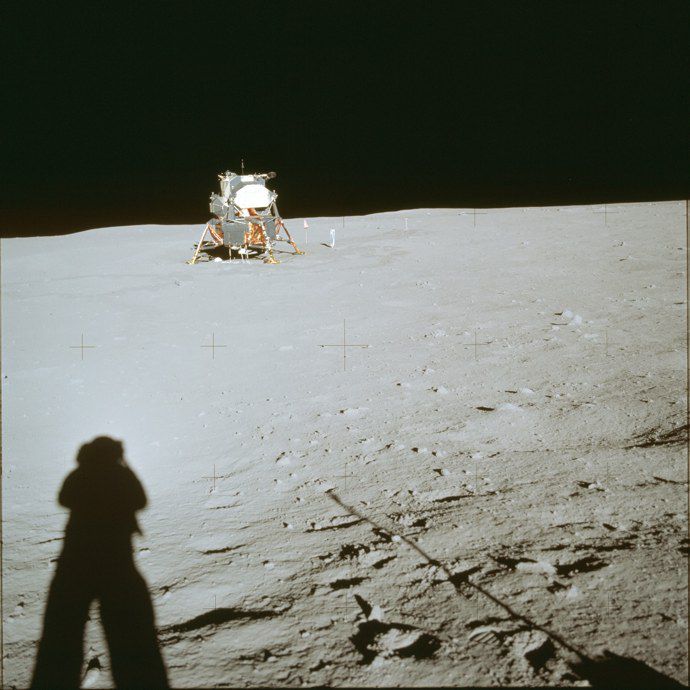
5961_690px.jpgA man told me once that the camera used in the moon by the Apollo 11 team was a Nikon, it was back in the days of the dawn on the Internet, when computers, cellphone and websites were yet to be ubiquitous, for a few years, I was made believe that Nikon was indeed the moon camera.

Boy, that man and I got the fact wrong.

It was until I was seriously learning photography that I got my hands on a UK based photo publication ‘Practical Photography’—which was my favorite photo magazine that time—when it featured an Apollo special issue to commemorate the man’s first moon landing and moon walk that I learned, it was actually a specially engineered Hasselblad medium format cameras that made it to the moon with the Apollo 11 team, they had 4 70mm Hasselblad 500 EL onboard including the backup cameras to capture the images of the orbit, the atmosphere and the moon itself.

There were technical & logical reasons for choosing a Hasselblad:

    – They needed a camera body large enough to fit the custom-sized buttons for the crews to operate (they wear large gloves)
    – They needed a high resolution camera and the compact-sized Hasselblad medium format was a logical choice for their sharp lenses & reliability

Here’s what Hasselblad had to say about it:

Simply put, NASA chose Hasselblad to go into space because we had the best cameras on earth. A claim that we are still proud to make today, forty years later.

The Hasselblad 500 EL was based on the acclaimed 500 series camera, modified with electronics, custom-sized button as well as space friendly body, the camera would capture historic images for the mankind’s most important achievement.

Record has it that they captured a total of 1407 exposures; 857 black & white and 550 on color film, and my curiosity was set to find out where to find these images, thanks to google, the Lunar & Planetary Institute hosted these images under the Apollo Image Atlas Gallery. It doesn’t stop there. High-resolution images are available for download too, how awesome!

Head over to the 70mm Hasselblad Image Catalog (Apollo 11), or the Hasselblad in space web feature from the cameramaker, or see the now retired space camera from the collect space discussion forum.

Looking forward the upcoming new race to the moon!

update:

The Boston Globe featured some awesome images on the Big Picture Gallery, and the NYTimes have some reader’s memory feature, finally The Apollo Archive has a dedicated collection of all Apollo mission images. (via kottke.org)

Indonesia Unite

The news of yet another blasts in the Indonesian landscape broke within seconds. Thanks to Twitter the public got first hand experiences from a few Twitter users posting minute-by-minute update via their handheld devices.

The sentiments of these so called citizen journalists were revealing yet sympathetic, with expressions more than the 140-words limit can offer. Mainstream media, on the other hand, started pouring graphics and mediocre comments, blowing the reports out of proportion. It is reported that CNN kept coming back to those bad graphics and commentary that made a friend left the TV cold; I, on the other hand got updates from a stylist that I was working with on an out-of-town photo shoot while I finally sat down and watched Keira Knightley’s fantasy drama—ATONEMENT (brilliant movie, mediocre story).

With the world growing more chaotic by days, good journalism is at stake, I can no longer comment or give you any insight how bad it is since I stopped watching TV and my utter refusal to read bad news. (most good news don’t sell and badly written, bad news are rubbish). This is for those who embrace technology and make a good use of it. For you journalists & producers, wake up and smell the coffee.

Support Indonesia Unite

Forwarded Call: From the iPhone to The Lens Blog

lensblog.jpg

The people at the lens blog decided to publish one of my old photo from my Places series. The panoramic photograph were captured using the first generation iPhone that I used to have, stiched using Photoshop’s excellent Photomerge feature.

Follow the link from the snapshot above or head over to the lens blog to see how mobile phones are changing the world of photography. If you care enough, you can find my entry on page 3, at the bottom.

Readers’ Photos: Call Forwarding (via NYTimes.com)

3 July 2009
The Quest for Good Photographs and How the Brain Perceives Images

U2’s Tribute to Michael: Man in the Mirror live from Barcelona

[youtube]http://www.youtube.com/watch?v=jWHAUx31HY0[/youtube]

It was all rather subtle and underplayed, with the band simply segueing wordlessly from their own ‘Angel Of Harlem’ to Jackson’s ‘Man In The Mirror’, and then to ‘Don’t Stop Til You Get Enough’.

If you’re in a hurry, jump to minute 1:53 (footage by Annaixavi).

update: a slightly better footage with better sound and cut directly to the song can be found here

(via nme.com)

1 July 2009
The Art of the Title Sequence: WALL·E
Finger Painting with the iPhone